
Premium Trees
Golden Legacy Farms offers premium trees in Central Oregon selected for beauty, resilience, and long-term performance in challenging growing conditions. From cold-hardy evergreens to distinctive specimen trees, our trees are grown with care to help homeowners, gardeners, and landscape professionals create lasting, thriving landscapes. Contact us to learn more.
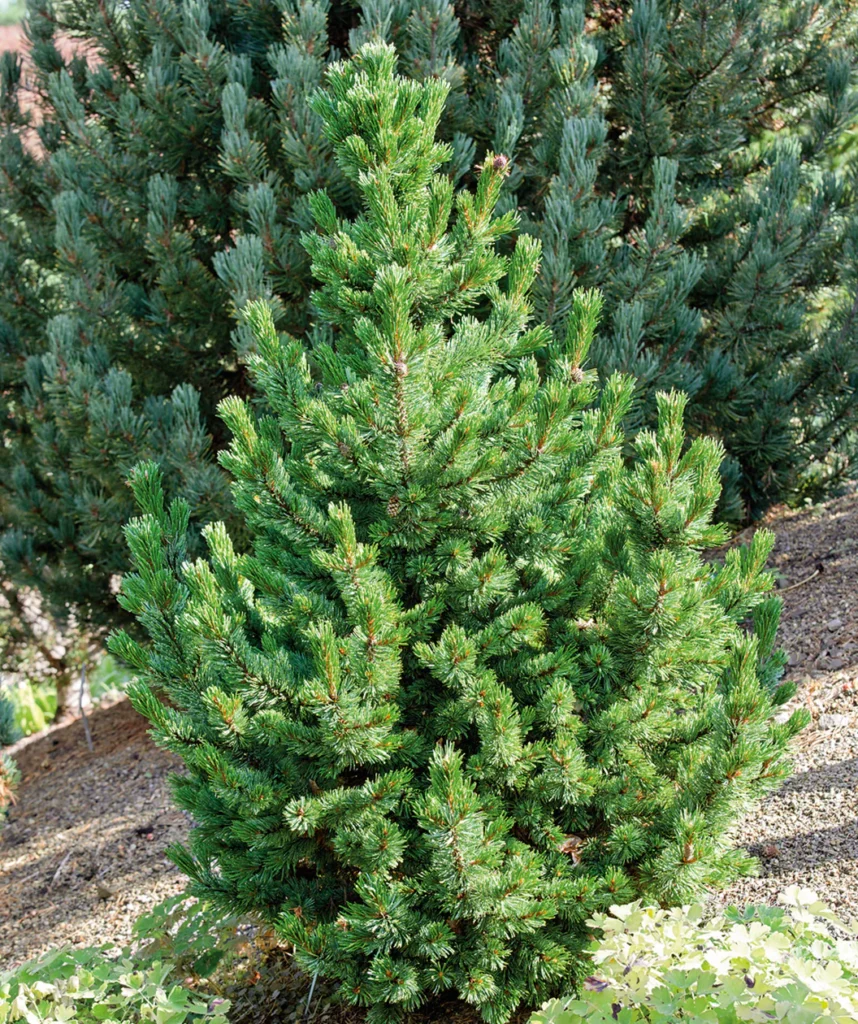
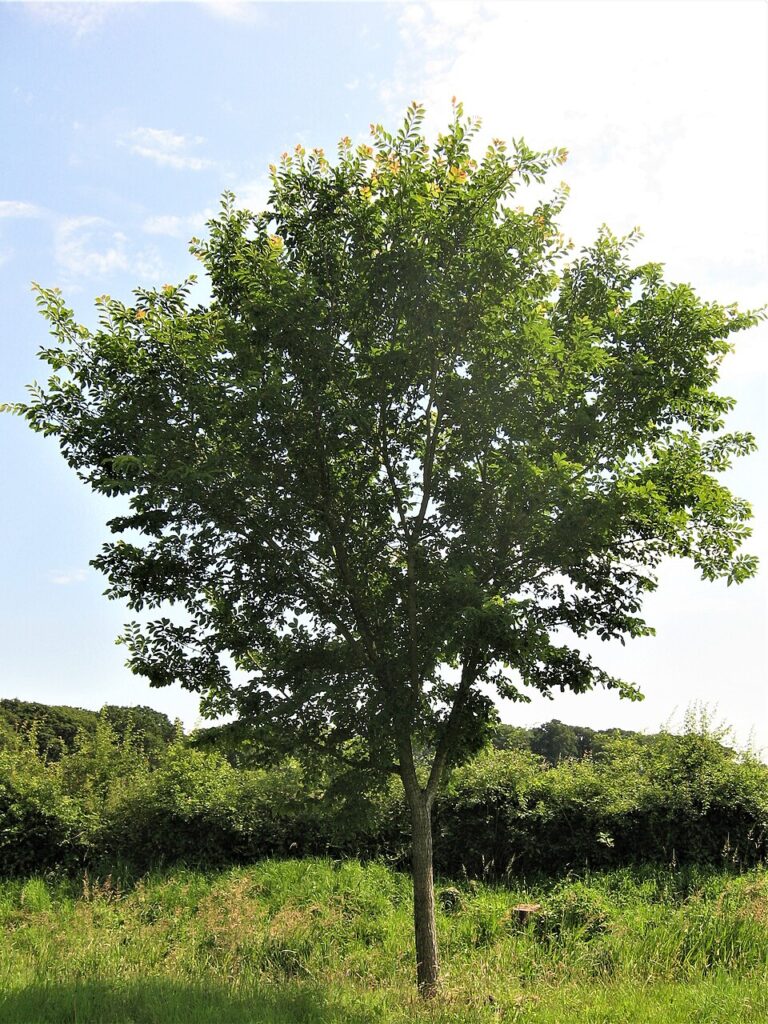
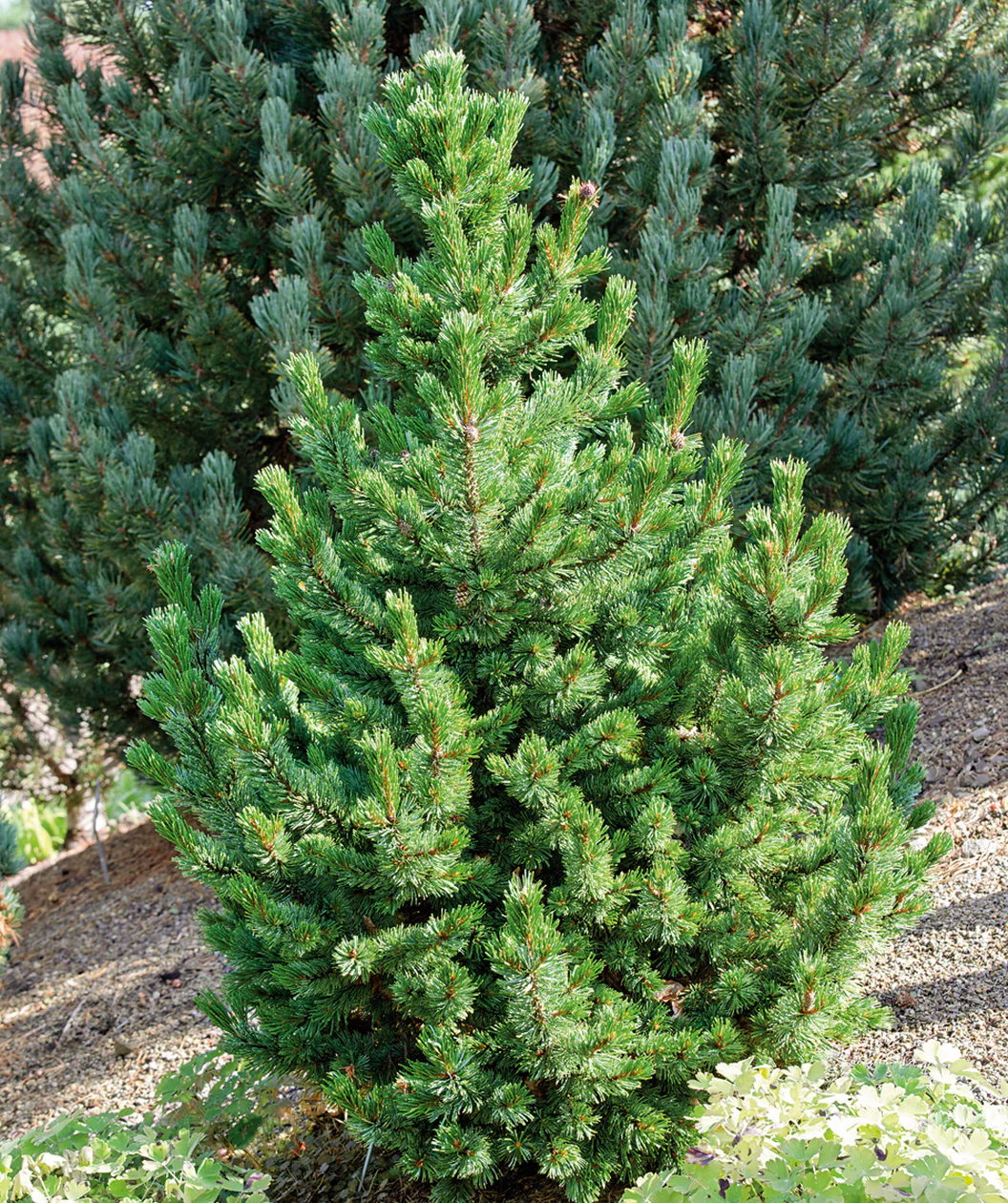
Bristlecone Pine (Pinus aristata ‘Carson’)
Description
Bristlecone Pine is among the oldest and most remarkable tree species in the world, with some individuals living for thousands of years. Shaped by centuries of wind, snow, and harsh mountain conditions, this slow-growing evergreen is prized for its rugged beauty, exceptional cold hardiness, and remarkable resilience.
Native to the high elevations of the western United States, Bristlecone Pine develops a distinctive, picturesque form that makes each tree unique. An outstanding choice for rock gardens, alpine landscapes, and collectors, it offers timeless beauty and a living connection to nature’s enduring strength.
Quick Facts
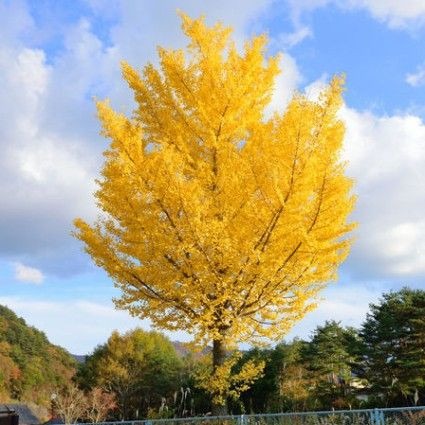
Ginkgo (Ginkgo biloba)
Description
Ginkgo is a living fossil and one of the oldest tree species on Earth, with ancestors dating back more than 200 million years. Its distinctive fan-shaped leaves emerge bright green in spring before turning a brilliant golden yellow in autumn, creating one of the season’s most spectacular displays.
Hardy, long-lived, and remarkably resistant to insects and disease, Ginkgo is an outstanding specimen tree that provides beauty, shade, and year-round interest for generations.
Quick Facts
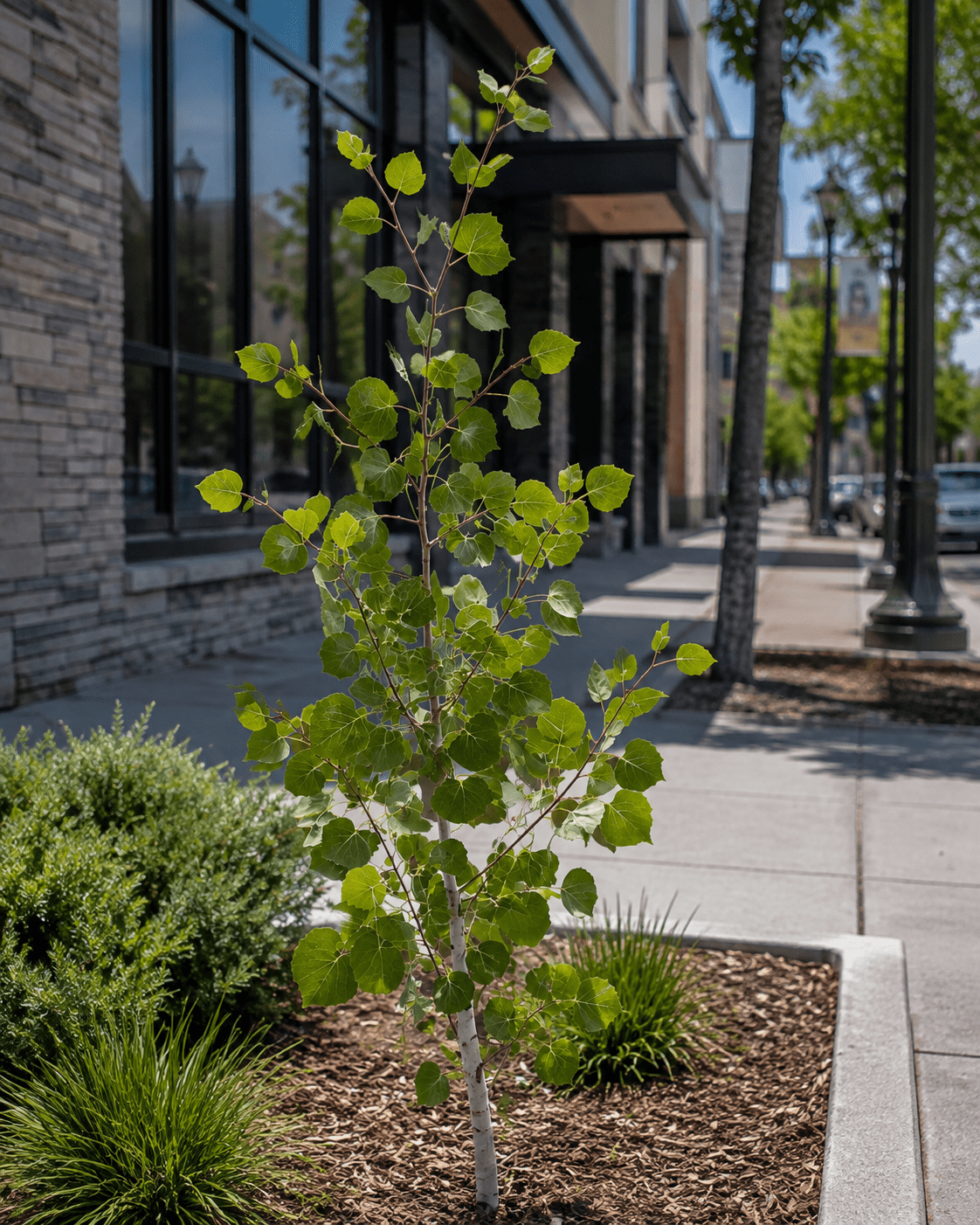
Quaking Aspen (Populus tremuloides)
Description
Quaking Aspen is a beautiful, cold-hardy tree admired for its brilliant white bark, deep green foliage, and shimmering leaves that quiver with the slightest breeze. In autumn, the foliage transforms into a spectacular display of golden yellow, bringing vibrant seasonal color to the landscape.
Adaptable to a variety of well-drained soils and thriving in cooler climates, Quaking Aspen is an excellent choice for naturalized plantings, windbreaks, or striking groves that offer beauty and movement throughout the seasons.
Quick Facts
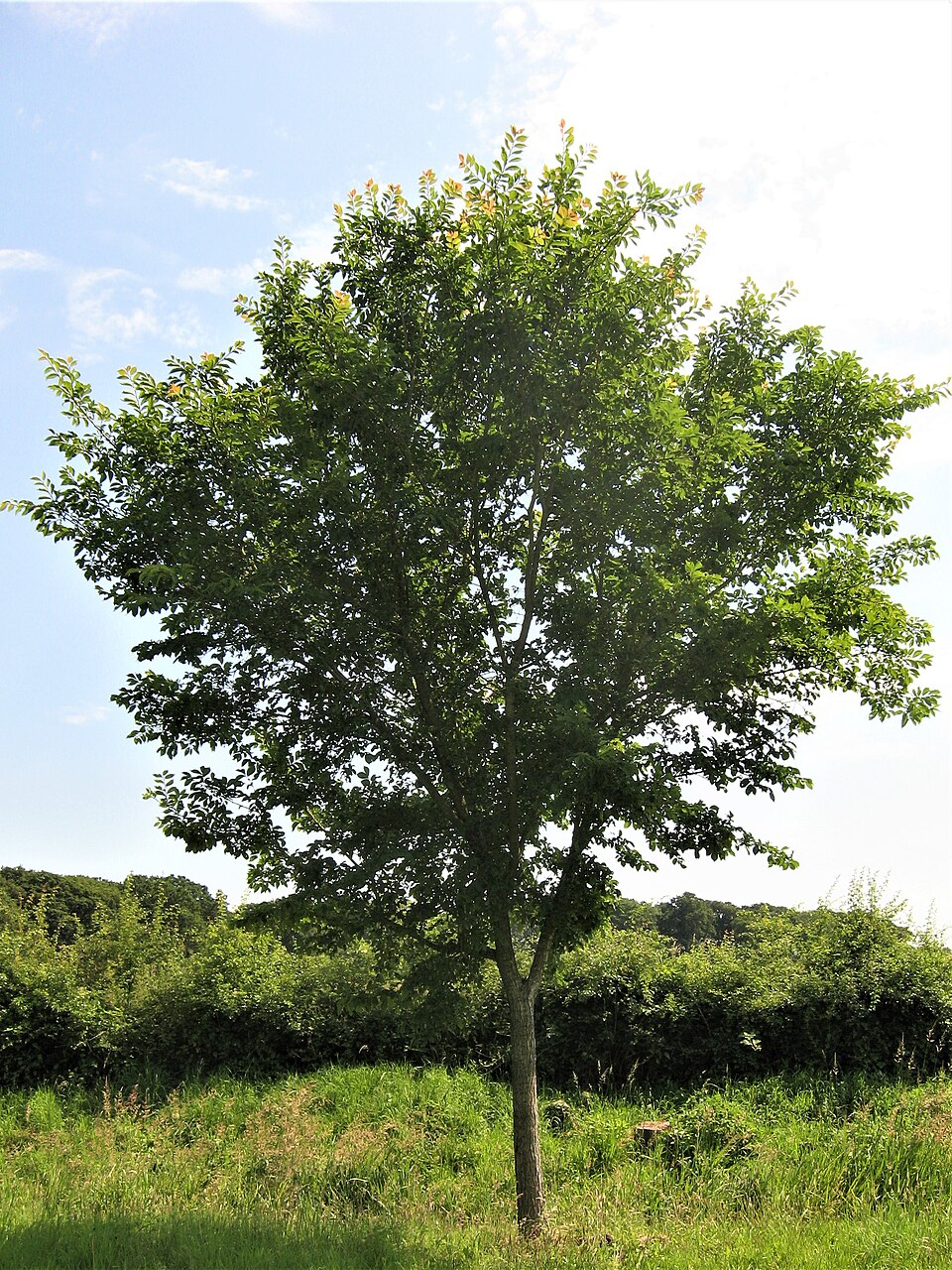
Triumph™ Elm (Ulmus 'Morton Glossy' Triumph™)
Description
Triumph™ Elm (‘Morton Glossy’) is a fast-growing, exceptionally hardy shade tree prized for its glossy, dark green foliage and attractive upright oval to vase-shaped form. Strong, symmetrical branching develops into a graceful canopy that provides abundant shade, while the foliage turns a warm golden yellow in autumn.
Highly adaptable to a wide range of soils and growing conditions, Triumph™ establishes quickly and offers outstanding resistance to Dutch elm disease and elm leaf beetle. An excellent choice for streets, parks, and residential landscapes, it combines the timeless beauty of the American elm with the durability and disease resistance today’s landscapes demand.
Quick Facts
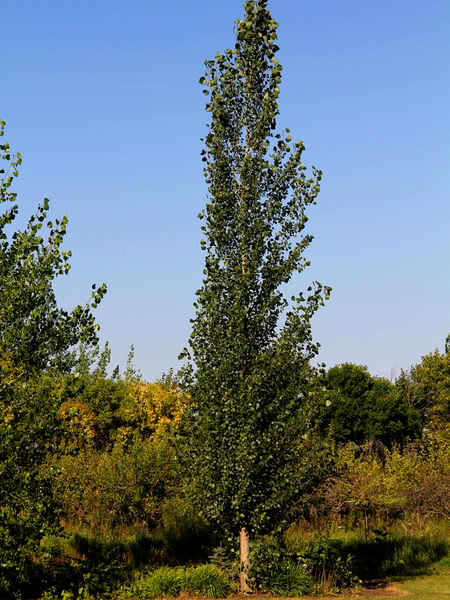
Sundance® Poplar (Populus 'Sundance')
Description
Sundance® Poplar is an exceptionally fast-growing, narrow columnar tree prized for its excellent cold hardiness and resistance to Bronze Leaf Disease. Developed at the Agroforestry Centre in Indian Head, Saskatchewan, it thrives in northern climates and adapts well to a wide range of soil conditions.
Once established, Sundance® Poplar is drought-tolerant and an outstanding choice for privacy screens, windbreaks, property borders, and lining driveways or roads. Unlike many poplars, it produces no cottony fluff, making it a clean, low-maintenance landscape tree that offers rapid growth and year-round beauty.
Quick Facts
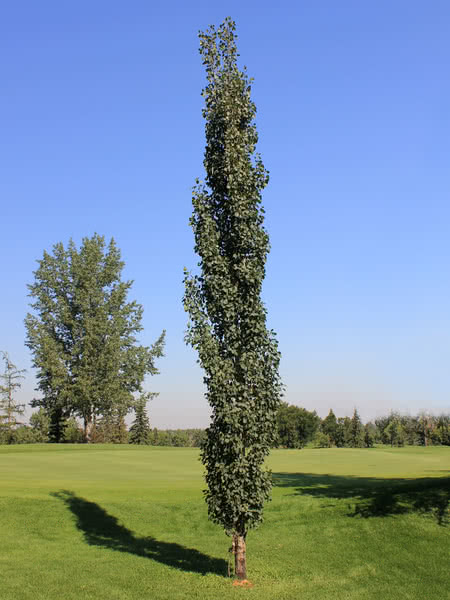
Swedish Aspen (Populus tremula 'Erecta')
Description
Swedish Aspen is an exceptionally fast-growing, narrow columnar tree that adds elegant vertical interest without requiring much space. Its slender form makes it an excellent choice for privacy screens, property borders, driveways, and other urban or residential landscapes where a compact footprint is desired.
Unlike many aspens and poplars, Swedish Aspen produces no cottony fluff and is less prone to suckering, making it a cleaner, lower-maintenance option. Adaptable to a wide range of growing conditions, it establishes quickly and requires little pruning, providing years of beauty with minimal care.
Quick Facts
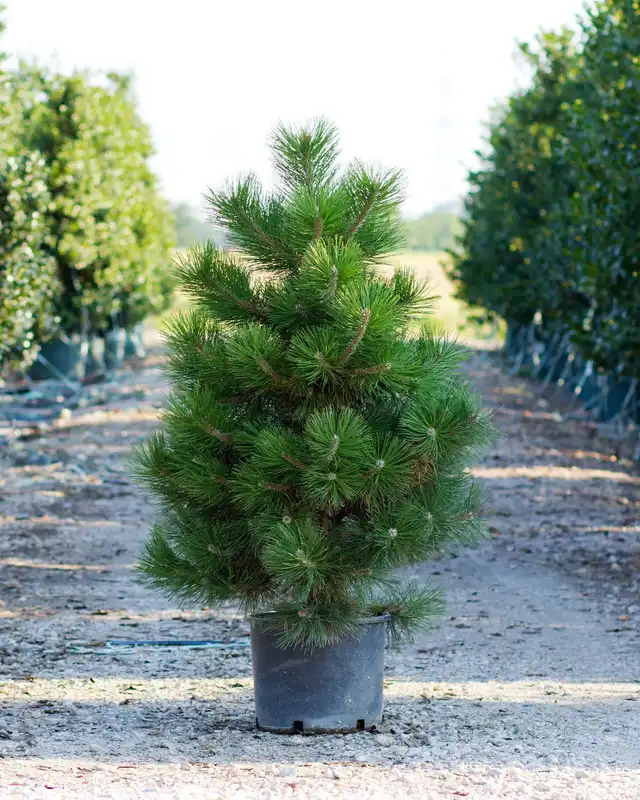
Austrian Pine (Pinus nigra)
Description
Austrian Pine is a hardy, moderately fast-growing evergreen admired for its dense, rounded form and long, rich green needles that provide year-round color and texture. Exceptionally durable, it tolerates snow, ice, wind, heat, and drought once established, as well as urban pollution, making it an excellent choice for a wide range of landscapes.
Whether planted as a specimen tree, windbreak, privacy screen, or natural border, Austrian Pine provides lasting beauty with minimal maintenance.
Quick Facts
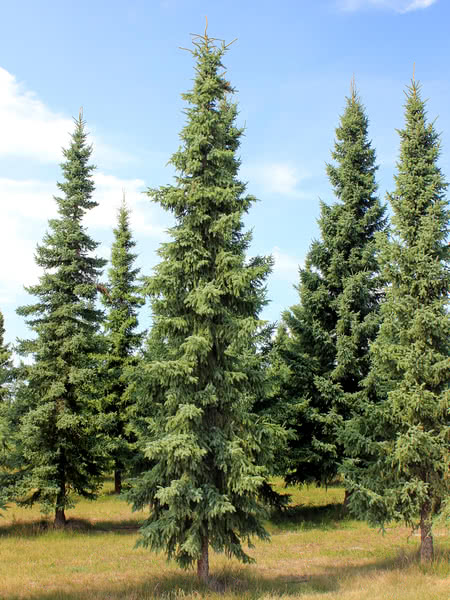
Black Spruce (Picea mariana)
Description
Black Spruce is a hardy, resilient evergreen valued for its exceptional cold tolerance and ability to thrive in wet or poorly drained soils, where many other conifers struggle. Its straight trunk, narrow crown, and compact growth habit give it an attractive, naturally upright appearance and require relatively little space.
Well-suited for naturalized landscapes, windbreaks, wildlife plantings, and challenging sites, Black Spruce provides dependable year-round color and structure, even under difficult growing conditions.
Quick Facts
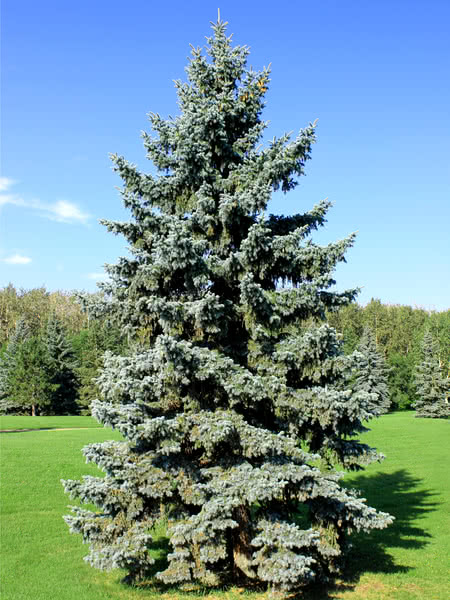
Colorado Spruce (Picea pungens)
Description
Colorado Spruce is a resilient, slow-growing evergreen native to the Rocky Mountains, appreciated for its dense, pyramidal shape and lush green to blue-green needles. Highly cold hardy and drought-tolerant after establishment, it adapts easily to various well-drained soils and performs well in tough climates.
Ideal as a specimen tree, windbreak, or privacy screen, Colorado Spruce provides year-round beauty, dependable performance, and lasting structure in the landscape.